Sunday, February 12, 2012

Holistic Massage Therapy

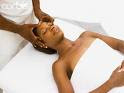
Holistic Massage is an ancient therapy that heals physical and emotional tension. Anna’s Holistic massage helps to restore balance to your body and mind and helps relax and de-stress you. We cover the back, neck, shoulders, legs and feet.

Our Holistic massage incorporates traditional Swedish massage techniques to release muscle tension and promote a sense of wellbeing. Holistic massage increases your blood and lymph circulation, boosts endorphin levels and can help restore natural sleeping patterns.

Benefits
There are many benefits associated with holistic massage. It benefits all body systems, as it is a natural and effective way to treat both physical conditions and psychological problems.

Short term
Improves skin tone and colour, it improves circulation and removes dead skin cells. Relives muscle fatigue, stiffness and soreness. Relaxes the mind, which in turn reduces tension and effects of stress. Increases energy as massage invigorates all body systems.

Long-term
Boosts the immune system and helps relieve insomnia and increases energy levels and aids lymphatic drainage.

Prices
60 minutes 500D

Friday, October 16, 2009

Working hard or studying too long on your laptop?


Anna's Massage Tips

Working hard or studying too long on your laptop?

Need a boost of energy and mental focus? Place your thumb behind your ear and your index finger in front of it.

Start at the top of your ear and gently rub the border, slowly moving down to the earlobe. Do both sides at the same time, and viola! You will feel more alert and charged to go on.

Wednesday, October 7, 2009

Walk to Health

The walking experience is primordial. All land-based creatures do it. Humans have been relying on this primary functional activity of daily life for as long as we have been around. Some people have developed it into a high-grade level of functional movement, an exercise that can combine performance with art, with health and fitness. Walking is uniquely human (though on two legs we cannot match the speed of most animals). We, nevertheless, can move with direction, determination, purpose and intention. Here the abstracted image ends and the real somatic feel begins.

Power Walking With Ease: From Hips To Spine To Arms

Walking upright requires an alignment with central gravity that is unique to humans. This connecting link starts from the hips, the strong bony structure and articulations of the pelvis generate three actions which are essential to getting lift and forward power. The hips have to rotate laterally, bend and extend, and flex.

That power is then transmitted to the spine and the ribs, which need to be in the best alignment to transmit the vectors of force.
So what if it isn’t in the best alignment? First, imagine a car trying to move uphill in high gear. There is not enough power, the engine overheats and damage soon occurs. It is the same in a human body. If the hips are not generating the "horsepower" because of restrictions in action, then you walk harder using the legs. The legs become stressed, often manifesting this stress as knee problems. Second, the hips are doing OK, but the spine is curved either in a lower-back curvature (lordosis) or a mid-back curvature (kyphosis).

Does this sound discouraging? Look at it this way, if you recognize you are working too hard to walk, it is only a matter of some sensing, learning and movement awareness to shift out of a poor habit into a better way of walking to get the system functioning the way it was designed to do.

Try This Exercise

1. Face a door or wall. Place your fingers on it and organize yourself to be standing close and in the vertical plane. Avoid any leaning forward or putting pressure on your fingers.

2. Now, stand on one leg. Keep that leg straight and push through that leg as if you were pressing into the ground and generating a ground force, a spring-like action that runs up your spine and gives you the feeling of uplift (getting taller).
3. Think of directing the force through your body and notice how the body starts to turn. While you are doing this your other leg should have no weight on it. It can be touching the ground with the toes with the heel lifted to maintain your balance. Practice this activity on one leg, rest, and then do it with your other leg.

The key to this exercise is trial by experiment in order to sense differences and notice connections. Simply by doing and noticing, you start to activate your innate ability to feel the connection between pushing through a straightened leg and following that force as it travels through your body. It will probably rotate you slightly through the left if you are standing on your right leg, or to the right if you are standing on your left leg.
Follow the force of this thrusting until you are clear where the end point is.

Simply by doing this exercise you are already developing movement awareness of sensing limbs, joint actions, resonant motion, lengthening and strengthening in an interconnected way. Once you start to cultivate the sensing of such connections, your walking will improve automatically.
Walking as described above elongates the spine, provides strengthening, endurance, relaxation and perhaps most important, confidence building. Walking is the basic foundation of fitness.

Friday, September 25, 2009

Lower Back Pain

Anna's Massage Tips
For back comfort...
If you have low back pain, particularly mild chronic pain in the sacral or sacro iliac areas, one very simple, but surprisingly effective method to relieve it is to keep your feet—either both at once or one at a time—slightly elevated on a low footrest whenever you are seated for any length of time, particularly if you work at a desk or computer.

You can purchase footrests for this purpose, or simply use a couple of thick books or a firm box. This combination, with a good lumbar support pillow, can make a huge difference in your back comfort.

Tuesday, September 15, 2009

Heal Your Child With Touch

Anna's Massage Tips

Heal Your Child With Touch

How powerful is a parent’s touch? Very calming and comforting—it relieves anxiety and conveys the message of security to the child.


To begin a massage, choose a quiet, comfortable, warm spot and rub oil (baby oil or olive oil will do just fine) on your hands so they’ll glide smoothly over your child’s skin.

Basically, massage your child’s face, chest, back of arms, hands, lets and feet. If your child is ticklish, maybe go a little deeper or skip over that spot of the body. End your massage with a hug and a kiss, and tell your child how much you love and appreciate him or her. They will love you for it! Happy massaging!

Wednesday, September 2, 2009

THE IMPORTANCE OF WATER

Most of the human body is comprised of this life-giving element, which performs many vital functions.

Why We Need It

Water is second only to air in importance for life. We can survive many days or even weeks without food, but we can only survive a few days without water. Unfortunately, the body’s need for water and its importance for health are often overlooked.

Approximately 60 to 75 percent of total body weight is water. While most people know that the blood, lymph, urine, sweat and tears are mostly water, they do not realize that the lungs are 90 percent water, the brain is 76 percent and even bones are 25 percent water. It also serves as a cushion and lubricant for our spine and other joints.
Most individuals lose between 10 and 16 cups of water per day. This loss is in sweat, urine, in the air we exhale and via direct evaporation from our skin. During exercise in a warm climate, as much as 8 cups of water can be lost in a single hour.

(You can visit the International Water Association’s Hydration Calculator to get an estimate on how much water you should have a day.)

Water’s Role In Massage
It’s important to keep your body’s fluid balance in check. You hear how vital it is to replenish what is lost during exercise, how the key to a successful workout is to keep well hydrated before, during and after exercising but did you also know that water is also important to drink post-massage?

Drinking water after a workout and/or a massage session is very important for creating balance in a person’s well-being,” says AMTA President Laurel J. Freeman. “The body uses muscle energy to move. The energy used from the muscles produces a byproduct called metabolic waste. There are many types of metabolic wastes, including lactic acid. Water helps the muscles by assisting the body's ability to release and eliminate metabolic waste to restore balance,” she says.

Anna says that massage ‘flushes out’ these metabolic waste products that have been trapped in soft tissues. “This puts the waste products into circulation in the cardiovascular and lymphatic systems where they are filtered and eliminated from the body,” she says. “Drinking lots of water provides the fluid medium for the ‘flushing out’ process. And, of course, drinking lots of water leads to more trips to the bathroom where water and waste products in circulation are eliminated.”

When We Don’t Get Enough
Insufficient water intake results in reduced cell function, which greatly diminishes the body’s ability to heal damaged tissues from injury and maintain optimal health. F. Batmanghelidj, M.D., author of Your Body’s Many Cries For Water, has successfully treated many diagnosed diseases—peptic ulcers, colitis, hypertension, rheumatoid arthritis, chronic back and neck pain, anxiety, depression, chronic fatigue, high cholesterol, asthma, allergies and diabetes—with simply increased and regular intake of water.

According to Batmanghelidj, dry mouth is the last sign of inadequate cellular water. When the thirst signals produced by the body are ignored or are responded to with intake of beverages other than water (i.e., soda, coffee, tea or concentrated fruit juice), eventually the body stops providing the sensation of thirst. It often requires drinking water regularly throughout the day for as long as six to eight months for the normal thirst signals to return, and for people to reacquire a taste for water. It can take up to a year or longer to rehydrate your tissues. The sensation of thirst also diminishes as we age. Therefore, it is very important for the elderly to acquire a “habit” of drinking adequate water to avoid cellular dehydration and subsequent health problems.

Caffeine’s Negative Effects

The loss of body water through urination is greatly increased by the ingestion of caffeinated and alcoholic beverages, as they a diuretic effect. Not only do we lose water, we also lose water-soluble vitamins, such as vitamin C, vitamin B1 (thiamine) and other B complex vitamins. There also is increased excretion of calcium, magnesium, potassium, sodium, chloride and zinc.

This loss can be made up by a diet rich in fruits and vegetables, since they can supply about 4 cups of water per day. But even with a diet high in fruits and vegetables, it is still necessary to drink an additional 6 to 8 cups of water per day to supply enough water to meet the body’s daily needs. For every caffeinated or alcoholic beverage you drink, you need to add an additional glass of pure water.

High intakes of caffeine have been linked to anxiety, insomnia, elevated blood pressure, heart palpitations, headaches, fibrocystic breast disease, diarrhea, increased stomach acidity and ulcers, birth defects and miscarriages. Long-term use of caffeine will cause overworked and weakened adrenals, which may lead to depression and chronic fatigue.

Tolerance for caffeine varies greatly. Some individuals can tolerate as much as 500 milligrams of caffeine per day, equivalent to five or more cups of coffee. Other people cannot tolerate even one cup of green tea, which contains approximately 35 milligrams of caffeine. This intolerance often is due to decreased capacity of the liver to clear caffeine from the body. If any symptoms of excess caffeine consumption are present or pregnancy is planned, caffeine should be eliminated from the diet. Otherwise intake of caffeine should be limited to less than 100 milligrams per day, the equivalent of one cup of coffee. Besides coffee and tea, caffeine is present in soda, chocolate, aspirin and other drugs, such as Fiorinal, Vivarin, NoDoz and Dexatrim.

Drink Up
There have been reports of people suffering from water intoxication, where too much water is consumed and it results in coma, or even death.

Technically, it is possible to drink too much water. However, according to the American Dietetic Association, the bigger concern is not consuming enough fluids.

Most people need 8 to 12 cups of water daily—from drinking water, other beverages and water in solid foods. And since certain medications, high-fiber intake and age can further boost your need for water, it’s more important to worry about getting enough high-quality H2O, than worrying about getting too much.

Thursday, August 27, 2009

Anna's Massage Tips


Get that knot out of your neck... There's no one around to help you get the knot out of your neck. You've been sitting at the computer for entirely too long. What are you to do? Keep a small towel in the office for just this occasion.

Wet the towel and microwave for 1 ½ minutes on high. Reach in very carefully to see if it's hot enough. Wrap the towel around your neck and sit back for a minute. Once comfortably sitting, begin to stretch your neck by lowering your head for 10 seconds in each of these positions: forward, left, and right. Remove the towel, take the palms of both hands and rub in a circular motion on both sides of the neck for 30 seconds.